Many custom options...


And formats...



Ches in Chinese / Japanese...
Buy a Ches calligraphy wall scroll here!
Personalize your custom “Ches” project by clicking the button next to your favorite “Ches” title below...
Switched to secondary search mode due to lack of results using primary.
These secondary results may not be very accurate. Try a different but similar meaning word or phrase for better results. Or...
Look up Ches in my Japanese Kanji & Chinese Character Dictionary(My dictionary is a different system then the calligraphy search you just tried)
If you want a special phrase, word, title, name, or proverb, feel free to contact me, and I will translate your custom calligraphy idea for you.
1. Chesley
2. Chesney
3. Chesnut
4. Chess
5. Chesser
6. Chester
7. Chestnut
8. Duchesne
9. Franchesca
10. Francheska
11. Hutcheson
12. Luchesi
13. Manchester
14. Marchese
15. McChesney
17. Peach / Peaches
18. Rochester
19. Sanches
20. Wealth / Fortune / Riches / Abundance
22. Winchester
Chesley

切斯利 is the name Chesley in Chinese (Mandarin).
Chesley

チェスリー is the name Chesley in Japanese Katakana.
Note: Because this title is entirely Japanese Katakana, it should be written by a Japanese calligrapher.
Chesney

切斯尼 is the name Chesney in Chinese (Mandarin).
Chesney

チェスニー is the name Chesney in Japanese Katakana.
Note: Because this title is entirely Japanese Katakana, it should be written by a Japanese calligrapher.
Chesnut

切斯納特 is the name Chesnut in Chinese (Mandarin).
Chesnut

チェスナット is the name Chesnut in Japanese Katakana.
Note: Because this title is entirely Japanese Katakana, it should be written by a Japanese calligrapher.
Chess
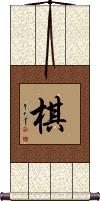
棋 is the most simple or generic way to write “chess” in Asia.
棋 is part of other more specific words for board games of strategy such as the western version of chess, Chinese chess, Weiqi, or Go.
In Japanese, this single character is pronounced “Go” and often refers to the game known in the west as “Go” (not just the 5-in-a-row version but also the complicated encirclement game of strategy known in China as Weiqi).
In Chinese, this can be more ambiguous as to which game of chess you speak.
If you like any version of chess, or games of intense strategy, this can be the character to hang on the wall in your game room.
Chess
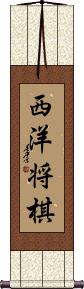
西洋将棋 is the Japanese title for the game of Chess (western style as opposed to Chinese Chess, Weiqi, or Japanese Go).
Chess
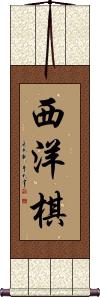
西洋棋 is the Chinese title for the game of Chess (western style as opposed to Chinese Chess, Weiqi, or Japanese Go).
Chesser

切瑟 is the name Chesser in Chinese (Mandarin).
Chesser

チェッサー is the name Chesser in Japanese Katakana.
Note: Because this title is entirely Japanese Katakana, it should be written by a Japanese calligrapher.
Chester
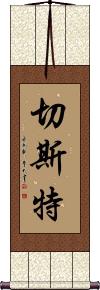
切斯特 is the name Chester in Chinese (Mandarin).
Chester
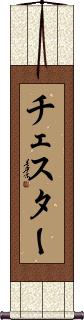
チェスター is the name Chester in Japanese (Katakana).
Note: Because this title is entirely Japanese Katakana, it should be written by a Japanese calligrapher.
Chestnut

切斯特納特 is the name Chestnut in Chinese (Mandarin).
Chestnut
チェスナット is the name Chestnut in Japanese Katakana.
Note: Because this title is entirely Japanese Katakana, it should be written by a Japanese calligrapher.
Duchesne

杜切斯內 is the name Duchesne in Chinese (Mandarin).
Duchesne

デュシェンヌ is the name Duchesne in Japanese Katakana.
Note: Because this title is entirely Japanese Katakana, it should be written by a Japanese calligrapher.
Franchesca
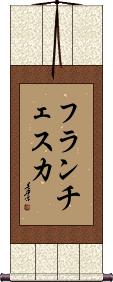
フランチェスカ is the name Franchesca in Japanese (Katakana).
Note: Because this title is entirely Japanese Katakana, it should be written by a Japanese calligrapher.
Francheska
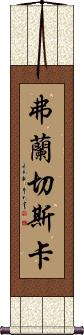
弗蘭切斯卡 is the name Francheska in Chinese (Mandarin).
Francheska
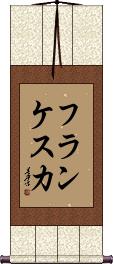
フランケスカ is the name Francheska in Japanese (Katakana).
Note: Because this title is entirely Japanese Katakana, it should be written by a Japanese calligrapher.
Hutcheson

哈奇森 is the name Hutcheson in Chinese (Mandarin).
Hutcheson

ハッチソン is the name Hutcheson in Japanese Katakana.
Note: Because this title is entirely Japanese Katakana, it should be written by a Japanese calligrapher.
Luchesi
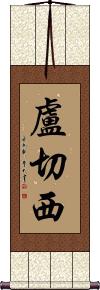
盧切西 is the name Luchesi in Chinese (Mandarin).
Luchesi
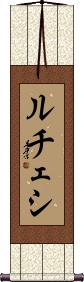
ルチェシ is the name Luchesi in Japanese Katakana.
Note: Because this title is entirely Japanese Katakana, it should be written by a Japanese calligrapher.
Manchester
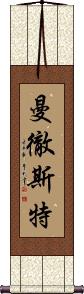
曼徹斯特 is the name Manchester in Chinese (Mandarin).
Manchester
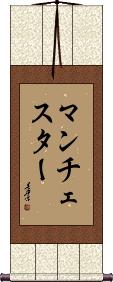
マンチェスター is the name Manchester in Japanese Katakana.
Note: Because this title is entirely Japanese Katakana, it should be written by a Japanese calligrapher.
Marchese

馬爾凱塞 is the name Marchese in Chinese (Mandarin).
Marchese

マルケーゼ is the name Marchese in Japanese Katakana.
Note: Because this title is entirely Japanese Katakana, it should be written by a Japanese calligrapher.
McChesney

麥克切斯尼 is the name McChesney in Chinese (Mandarin).
McChesney

マクチェスニー is the name McChesney in Japanese Katakana.
Note: Because this title is entirely Japanese Katakana, it should be written by a Japanese calligrapher.
Monkey Stealing Peaches
Martial arts term
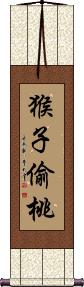
猴子偷桃 is a martial arts term that I find hilarious. I thought Stephen Chow had made this up for his Monkey King movie. After some research, it turns out to be real.
This can be translated as “monkey stealing peaches” or “monkey steals the peach.” It refers to distracting an opponent with one hand and seizing his testicles with the other.
In colloquial Chinese speech, this can refer to grabbing somebody by the balls (without any martial arts technique to the grabbing).
Peach / Peaches
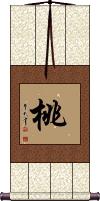
桃 means peach or peaches (Prunus persica) in Chinese, old Korean Hanja, and Japanese Kanji.
In Chinese culture, the peach represents longevity or long life.
This can also be the Japanese surname, Momosaki.
Rochester

羅切斯特 is the name Rochester in Chinese (Mandarin).
Rochester

ロチェスター is the name Rochester in Japanese Katakana.
Note: Because this title is entirely Japanese Katakana, it should be written by a Japanese calligrapher.
Sanches
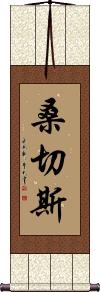
桑切斯 is the name Sanches in Chinese (Mandarin).
Sanches
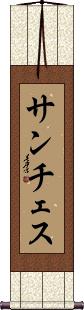
サンチェス is the name Sanches in Japanese Katakana.
Note: Because this title is entirely Japanese Katakana, it should be written by a Japanese calligrapher.
Wealth / Fortune / Riches / Abundance
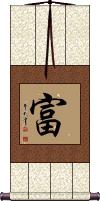
The title says it all; this word is clearly understood in Chinese and Japanese as well as Korean Hanja.
Wealth / Riches / Fortune
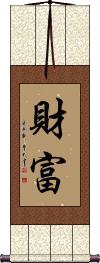
財富 means wealth or riches in Chinese.
Hanging this on your wall will label you as a “lover of money” or a “greedy person.” Order this only if you don't mind being seen in this light.
Winchester

溫徹斯特 is the name Winchester in Chinese (Mandarin).
Winchester

ウィンチェスター is the name Winchester in Japanese Katakana.
Note: Because this title is entirely Japanese Katakana, it should be written by a Japanese calligrapher.
The following table may be helpful for those studying Chinese or Japanese...
| Title | Characters | Romaji (Romanized Japanese) | Various forms of Romanized Chinese | |
| Chesley | 切斯利 | qiè sī lì qie4 si1 li4 qie si li qiesili | ch`ieh ssu li chiehssuli chieh ssu li |
|
| Chesley | チェスリー | chesurii / chesuri | ||
| Chesney | 切斯尼 | qiè sī ní qie4 si1 ni2 qie si ni qiesini | ch`ieh ssu ni chiehssuni chieh ssu ni |
|
| Chesney | チェスニー | chesunii / chesuni | ||
| Chesnut | 切斯納特 切斯纳特 | qiè sī nà tè qie4 si1 na4 te4 qie si na te qiesinate | ch`ieh ssu na t`e chiehssunate chieh ssu na te |
|
| Chesnut | チェスナット | chesunatto | ||
| Chess | 棋 | go | qí / qi2 / qi | ch`i / chi |
| Chess | 西洋将棋 | seiyoushougi seiyoshogi | ||
| Chess | 西洋棋 | xī yáng qí xi1 yang2 qi2 xi yang qi xiyangqi | hsi yang ch`i hsiyangchi hsi yang chi |
|
| Chesser | 切瑟 | qiè sè / qie4 se4 / qie se / qiese | ch`ieh se / chiehse / chieh se | |
| Chesser | チェッサー | chessaa / chesa | ||
| Chester | 切斯特 | qiè sī tè qie4 si1 te4 qie si te qiesite | ch`ieh ssu t`e chiehssute chieh ssu te |
|
| Chester | チェスター | chesutaa / chesuta | ||
| Chestnut | 切斯特納特 切斯特纳特 | qiè sī tè nà tè qie4 si1 te4 na4 te4 qie si te na te qiesitenate | ch`ieh ssu t`e na t`e chiehssutenate chieh ssu te na te |
|
| Chestnut | チェスナット | chesunatto | ||
| Duchesne | 杜切斯內 杜切斯内 | dù qiè sī nèi du4 qie4 si1 nei4 du qie si nei duqiesinei | tu ch`ieh ssu nei tuchiehssunei tu chieh ssu nei |
|
| Duchesne | デュシェンヌ | de~shennu | ||
| Franchesca | フランチェスカ | furanchesuka | ||
| Francheska | 弗蘭切斯卡 弗兰切斯卡 | fú lán qiè sī kǎ fu2 lan2 qie4 si1 ka3 fu lan qie si ka fulanqiesika | fu lan ch`ieh ssu k`a fulanchiehssuka fu lan chieh ssu ka |
|
| Francheska | フランケスカ | furankesuka | ||
| Hutcheson | 哈奇森 | hā qí sēn ha1 qi2 sen1 ha qi sen haqisen | ha ch`i sen hachisen ha chi sen |
|
| Hutcheson | ハッチソン | hacchison / hachison | ||
| Luchesi | 盧切西 卢切西 | lú qiè xī lu2 qie4 xi1 lu qie xi luqiexi | lu ch`ieh hsi luchiehhsi lu chieh hsi |
|
| Luchesi | ルチェシ | rucheshi | ||
| Manchester | 曼徹斯特 曼彻斯特 | màn chè sī tè man4 che4 si1 te4 man che si te manchesite | man ch`e ssu t`e manchessute man che ssu te |
|
| Manchester | マンチェスター | manchesutaa manchesuta | ||
| Marchese | 馬爾凱塞 马尔凯塞 | mǎ ěr kǎi sāi ma3 er3 kai3 sai1 ma er kai sai maerkaisai | ma erh k`ai sai maerhkaisai ma erh kai sai |
|
| Marchese | マルケーゼ | marukeeze / marukeze | ||
| McChesney | 麥克切斯尼 麦克切斯尼 | mài kè qiè sī ní mai4 ke4 qie4 si1 ni2 mai ke qie si ni maikeqiesini | mai k`o ch`ieh ssu ni maikochiehssuni mai ko chieh ssu ni |
|
| McChesney | マクチェスニー | makuchesunii makuchesuni | ||
| Monkey Stealing Peaches | 猴子偷桃 | hóu zi tōu táo hou2 zi5 tou1 tao2 hou zi tou tao houzitoutao | hou tzu t`ou t`ao houtzutoutao hou tzu tou tao |
|
| Peach Peaches | 桃 | momo | táo / tao2 / tao | t`ao / tao |
| Rochester | 羅切斯特 罗切斯特 | luó qiè sī tè luo2 qie4 si1 te4 luo qie si te luoqiesite | lo ch`ieh ssu t`e lochiehssute lo chieh ssu te |
|
| Rochester | ロチェスター | rochesutaa / rochesuta | ||
| Sanches | 桑切斯 | sāng qiè sī sang1 qie4 si1 sang qie si sangqiesi | sang ch`ieh ssu sangchiehssu sang chieh ssu |
|
| Sanches | サンチェス | sanchesu | ||
| Wealth Fortune Riches Abundance | 富 | tomi | fù / fu4 / fu | |
| Wealth Riches Fortune | 財富 财富 | cái fù / cai2 fu4 / cai fu / caifu | ts`ai fu / tsaifu / tsai fu | |
| Winchester | 溫徹斯特 温彻斯特 | wēn chè sī tè wen1 che4 si1 te4 wen che si te wenchesite | wen ch`e ssu t`e wenchessute wen che ssu te |
|
| Winchester | ウィンチェスター | winchesutaa winchesuta | ||
| In some entries above you will see that characters have different versions above and below a line. In these cases, the characters above the line are Traditional Chinese, while the ones below are Simplified Chinese. | ||||

Successful Chinese Character and Japanese Kanji calligraphy searches within the last few hours...



