Many custom options...


And formats...



Chri in Chinese / Japanese...
Buy a Chri calligraphy wall scroll here!
Personalize your custom “Chri” project by clicking the button next to your favorite “Chri” title below...
Switched to secondary search mode due to lack of results using primary.
These secondary results may not be very accurate. Try a different but similar meaning word or phrase for better results. Or...
Look up Chri in my Japanese Kanji & Chinese Character Dictionary(My dictionary is a different system then the calligraphy search you just tried)
If you want a special phrase, word, title, name, or proverb, feel free to contact me, and I will translate your custom calligraphy idea for you.
1. Chris
2. Chrisa
3. Chrishi
4. Chrishlyn
5. Chrislynn
6. Chrisman
7. Chrissa
8. Chrissi
9. Chrissy
10. Christa
11. Christal
12. Christalline
13. Christel
14. Christelle
15. Christen
16. Christensen
17. Christenson
18. Christer
19. Christi
20. Christia
21. Christiaan
22. Christian
23. Christian / Disciple of Christ
25. Christian Friend
26. Christian
28. Christiana
29. Christiane
30. Christianne
31. Christiansen
32. Christianson
33. Christie
34. Christin
35. Christina
36. Christine
37. Christman
38. Christmas
39. Christner
40. Christo
41. Christofer
42. Christoph
43. Christophe
44. Christopher
45. Christopherson
46. Christophine
47. Christov
48. Christy
49. Gilchrist
50. Christ
53. Jesus Christ
55. Marie-Christine
56. Merry Christmas
Chris
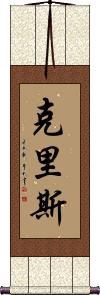
克里斯 is the name Chris in Chinese (Mandarin).
Chris
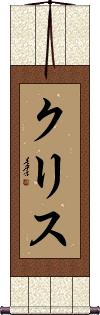
クリス is the name Chris in Japanese.
Note: Because this title is entirely Japanese Katakana, it should be written by a Japanese calligrapher.
Chrisa

克里薩 is the name Chrisa in Chinese (Mandarin).
Chrisa

クリスア is the name Chrisa in Japanese Katakana.
Note: Because this title is entirely Japanese Katakana, it should be written by a Japanese calligrapher.
Chrishi
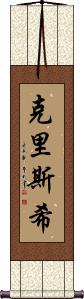
克里斯希 is the name Chrishi in Chinese (Mandarin).
Chrishi
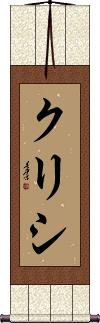
クリシ is the name Chrishi in Japanese (Katakana).
Note: Because this title is entirely Japanese Katakana, it should be written by a Japanese calligrapher.
Chrishlyn
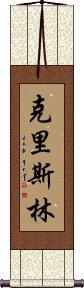
克里斯林 is the name Chrishlyn in Chinese (Mandarin).
Chrishlyn
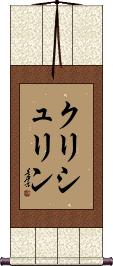
クリシュリン is the name Chrishlyn in Japanese Katakana.
Note: Because this title is entirely Japanese Katakana, it should be written by a Japanese calligrapher.
Chrislynn
克里斯林 is the name Chrislynn in Chinese (Mandarin).
Chrislynn

クリスリン is the name Chrislynn in Japanese Katakana.
Note: Because this title is entirely Japanese Katakana, it should be written by a Japanese calligrapher.
Chrisman

克里斯曼 is the name Chrisman in Chinese (Mandarin).
Chrisman

クリスマン is the name Chrisman in Japanese Katakana.
Note: Because this title is entirely Japanese Katakana, it should be written by a Japanese calligrapher.
Chrissa
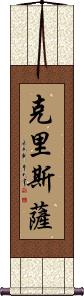
克里斯薩 is the name Chrissa in Chinese (Mandarin).
Chrissa
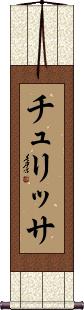
チュリッサ is the name Chrissa in Japanese (Katakana).
Note: Because this title is entirely Japanese Katakana, it should be written by a Japanese calligrapher.
Chrissi
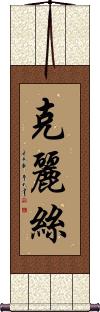
克麗絲 is the name Chrissi in Chinese (Mandarin).
Chrissi
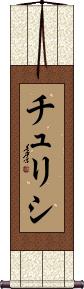
チュリシ is the name Chrissi in Japanese (Katakana).
Note: Because this title is entirely Japanese Katakana, it should be written by a Japanese calligrapher.
Chrissy
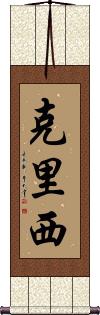
克里西 is the name Chrissy in Chinese (Mandarin).
Chrissy
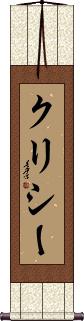
クリシー is the name Chrissy in Japanese.
Note: Because this title is entirely Japanese Katakana, it should be written by a Japanese calligrapher.
Christa
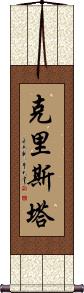
克里斯塔 is the name Christa in Chinese (Mandarin).
Christa
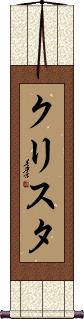
クリスタ is the name Christa in Japanese.
Note: Because this title is entirely Japanese Katakana, it should be written by a Japanese calligrapher.
Christal
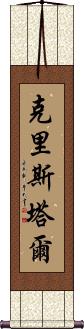
克里斯塔爾 is the name Christal in Chinese (Mandarin).
Christal
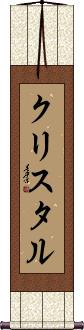
クリスタル is the name Christal in Japanese (Katakana).
Note: Because this title is entirely Japanese Katakana, it should be written by a Japanese calligrapher.
Christalline
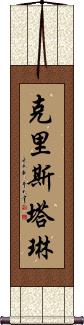
This is a common Mandarin Chinese transliteration for the female French name Christalline.
Christalline
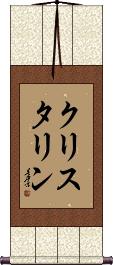
クリスタリン is the name Christalline in Japanese (Katakana).
Note: Because this title is entirely Japanese Katakana, it should be written by a Japanese calligrapher.
Christel
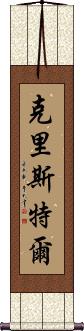
克里斯特爾 is the name Christel in Chinese (Mandarin).
Christel
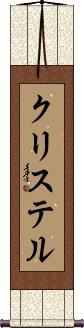
クリステル is the name Christel in Japanese Katakana.
Note: Because this title is entirely Japanese Katakana, it should be written by a Japanese calligrapher.
Christelle
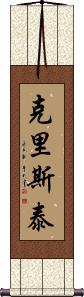
This is a common Mandarin Chinese transliteration for the female French name Christelle.
Christelle
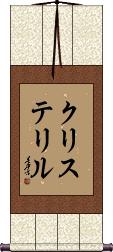
クリステリル is the name Christelle in Japanese (Katakana).
Note: Because this title is entirely Japanese Katakana, it should be written by a Japanese calligrapher.
Christen
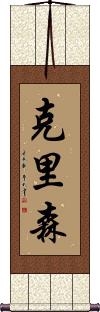
克里森 is the name Christen in Chinese (Mandarin).
Christen
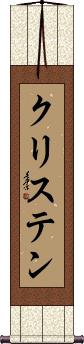
クリステン is the name Christen in Japanese Katakana.
Note: Because this title is entirely Japanese Katakana, it should be written by a Japanese calligrapher.
Christensen

克里斯滕森 is the name Christensen in Chinese (Mandarin).
Christensen

クリステンセン is the name Christensen in Japanese Katakana.
Note: Because this title is entirely Japanese Katakana, it should be written by a Japanese calligrapher.
Christenson
克里斯滕森 is the name Christenson in Chinese (Mandarin).
Christenson

クリステンソン is the name Christenson in Japanese Katakana.
Note: Because this title is entirely Japanese Katakana, it should be written by a Japanese calligrapher.
Christer
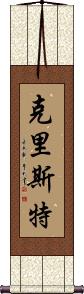
克里斯特 is the name Christer in Chinese (Mandarin).
Christer
クリステル is the name Christer in Japanese Katakana.
Note: Because this title is entirely Japanese Katakana, it should be written by a Japanese calligrapher.
Christi
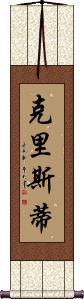
克里斯蒂 is the name Christi in Chinese (Mandarin).
Christi
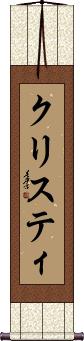
クリスティ is the name Christi in Japanese Katakana.
Note: Because this title is entirely Japanese Katakana, it should be written by a Japanese calligrapher.
Christia
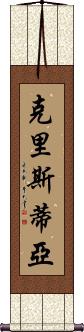
克里斯蒂亞 is the name Christia in Chinese (Mandarin).
Christia
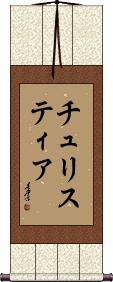
チュリスティア is the name Christia in Japanese (Katakana).
Note: Because this title is entirely Japanese Katakana, it should be written by a Japanese calligrapher.
Christiaan
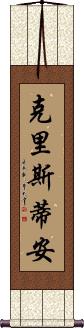
克里斯蒂安 is the name Christiaan in Chinese (Mandarin).
Christiaan
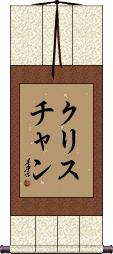
クリスチャン is the name Christiaan in Japanese Katakana.
Note: Because this title is entirely Japanese Katakana, it should be written by a Japanese calligrapher.
Christian
克里斯蒂安 is the transliteration to Mandarin Chinese for the given name Christian.
Christian / Disciple of Christ
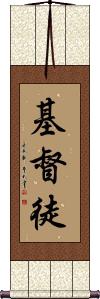
基督徒 is a very strong and direct word in Chinese for “Christian.”
The literal translation of the first two characters is “Christ.”
The last character means apprentice, follower, or disciple.
Altogether these three characters mean “Christ's Disciple” or “Christ's Apprentice.” 基督徒 is a pretty cool title to hang on your wall if you are a devout Christian.
Also used by Japanese Christians (but may be unfamiliar to non-Christian Japanese people).
See Also: God of Abraham
Disciple of Christianity
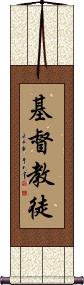
基督教徒 is the most verbose (longest) word for “Christian” in the Chinese and Japanese languages.
The literal translation of the first two characters is Christ.
The third Character means “Religion” or “Teaching.”
The last character means “apprentice” or “disciple.”
Altogether these three characters mean “Christ's Teaching Disciple” or “Christ's Religion Apprentice.”
Note: The last two characters are sometimes translated together as “follower (of a religion),” so you could also say it means “Follower of Christ.”
This four-character title makes it very clear what you are talking about in Chinese.
See Also: God of Abraham
Christian Friend
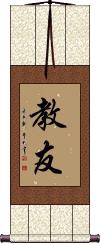
Depending on the context, 教友 can mean Christian or “friend of the same religion.”
While technically, it could be any religion, this is used mainly within the Christian faith. You can also translate this as “Christian friend” and, in some cases, “Church member.”
Christian
クリスチャン is the name Christian in Japanese (Katakana).
Note: Because this title is entirely Japanese Katakana, it should be written by a Japanese calligrapher.
Christianity / Christian
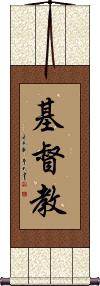
基督教 is the Chinese, Japanese and Korean word for “Christianity.”
Just as in English, this word is often used to mean “Protestant” but includes Catholics in the true definition.
It is the word used to refer to the whole “Christian religion” or “Christian Faith,” and therefore, it can be translated as “Christianity.” However, used as an adjective in regard to a person, it would translate as “Christian.” But more like saying, “His religion is Christianity,” rather than a noun form.
If you break it apart, the characters mean Base/Foundation Leading/Supervising Religion/Teaching. It makes more sense in Japanese, Chinese, and Korean. The first two characters together are translated as “Christ.” So you can also say this means “Christ's Religion” or “Christ's Teachings” when directly translated, or in reverse, “The Religion of Christ” or “The Teaching of Christ.”
Notes: The last character has a slight difference in one stroke - however, in calligraphic form, this will not be apparent. This entry can easily be read by any Korean person who knows Hanja characters (Chinese characters used in Korean).
See Also: God of Abraham
Christiana
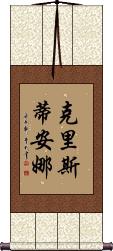
克里斯蒂安娜 is the name Christiana in Chinese (Mandarin).
Christiana
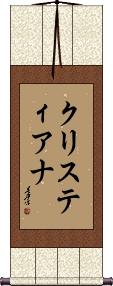
クリスティアナ is the name Christiana in Japanese Katakana.
Note: Because this title is entirely Japanese Katakana, it should be written by a Japanese calligrapher.
Christiane
克里斯蒂安 is the name Christiane in Chinese (Mandarin).
Christiane
克里斯蒂安 is the name Christiane in Chinese (Mandarin).
Christianne
克里斯蒂安 is the name Christianne in Chinese (Mandarin).
Christianne
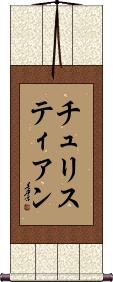
チュリスティアン is the name Christianne in Japanese (Katakana).
Note: Because this title is entirely Japanese Katakana, it should be written by a Japanese calligrapher.
Christiansen

克里斯蒂安森 is the name Christiansen in Chinese (Mandarin).
Christiansen

クリスチャンセン is the name Christiansen in Japanese Katakana.
Note: Because this title is entirely Japanese Katakana, it should be written by a Japanese calligrapher.
Christianson
克里斯蒂安森 is the name Christianson in Chinese (Mandarin).
Christianson

クリスチャンソン is the name Christianson in Japanese Katakana.
Note: Because this title is entirely Japanese Katakana, it should be written by a Japanese calligrapher.
Christie
克里斯蒂 is the name Christie in Chinese (Mandarin).
Christie
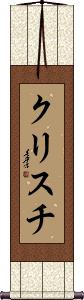
クリスチ is the name Christie in Japanese.
Note: Because this title is entirely Japanese Katakana, it should be written by a Japanese calligrapher.
Christin
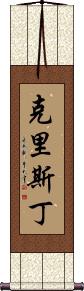
克里斯丁 is the name Christin in Chinese (Mandarin).
Christin
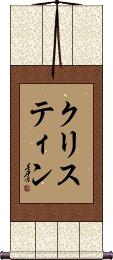
クリスティン is the name Christin in Japanese Katakana.
Note: Because this title is entirely Japanese Katakana, it should be written by a Japanese calligrapher.
Christina
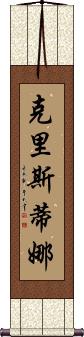
克里斯蒂娜 is the name Christina in Chinese (Mandarin).
Christina
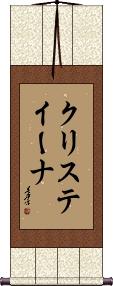
クリステイーナ is the name Christina in Japanese.
Note: Because this title is entirely Japanese Katakana, it should be written by a Japanese calligrapher.
Christine
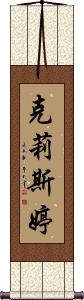
克莉斯婷 is the name Christine in Chinese (Mandarin).
Christine
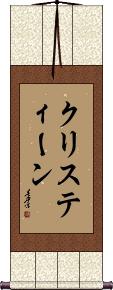
クリスティーン is the name Christine in Japanese.
Note: Because this title is entirely Japanese Katakana, it should be written by a Japanese calligrapher.
Christman
克里斯曼 is the name Christman in Chinese (Mandarin).
Christman

クリストマン is the name Christman in Japanese Katakana.
Note: Because this title is entirely Japanese Katakana, it should be written by a Japanese calligrapher.
Christmas
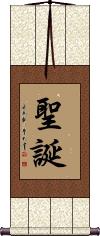
聖誕 is how to write Christmas in Chinese.
The original meaning was the Emperor's Birthday (and sometimes Confucius' birthday), but in modern times, this is almost exclusively used to refer to the western religious holiday of Christmas.
Christmas
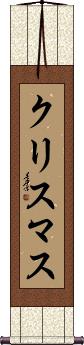
クリスマス is Christmas in Japanese.
This sounds like the English title Christmas, using Japanese sounds. This can also be used to represent the surname Christmas.
Note: Because this title is entirely Japanese Katakana, it should be written by a Japanese calligrapher.
Christner
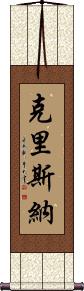
克里斯納 is the name Christner in Chinese (Mandarin).
Christner

クリストナー is the name Christner in Japanese Katakana.
Note: Because this title is entirely Japanese Katakana, it should be written by a Japanese calligrapher.
Christo
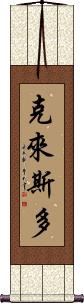
This is a common Mandarin Chinese transliteration for the male name Christo.
Christo
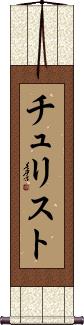
チュリスト is the name Christo in Japanese (Katakana).
Note: Because this title is entirely Japanese Katakana, it should be written by a Japanese calligrapher.
Christofer
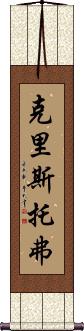
克里斯托弗 is the name Christofer in Chinese (Mandarin).
Christofer
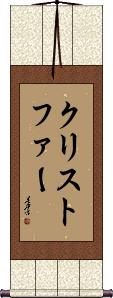
クリストファー is the name Christofer in Japanese Katakana.
Note: Because this title is entirely Japanese Katakana, it should be written by a Japanese calligrapher.
Christoph
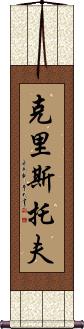
克里斯托夫 is the name Christoph in Chinese (Mandarin).
Christoph
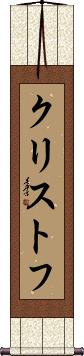
クリストフ is the name Christoph in Japanese Katakana.
Note: Because this title is entirely Japanese Katakana, it should be written by a Japanese calligrapher.
Christophe
克里斯托夫 is the name Christophe in Chinese (Mandarin).
Christophe
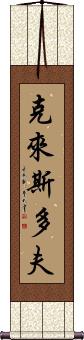
This is a common Mandarin Chinese transliteration for the male French name Christophe.
Christophe
クリストフ is the name Christophe in Japanese.
Note: Because this title is entirely Japanese Katakana, it should be written by a Japanese calligrapher.
Christopher
克來斯多夫 is the name Christopher in Chinese (Mandarin).
Christopher
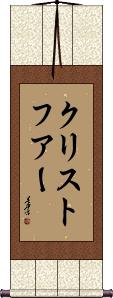
クリストフアー is the name Christopher in Japanese.
Note: Because this title is entirely Japanese Katakana, it should be written by a Japanese calligrapher.
Christopherson

克里斯托弗森 is the name Christopherson in Chinese (Mandarin).
Christopherson

クリストファーソン is the name Christopherson in Japanese Katakana.
Note: Because this title is entirely Japanese Katakana, it should be written by a Japanese calligrapher.
Christophine
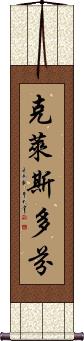
This is a common Mandarin Chinese transliteration for the female French name Christophine.
Christophine
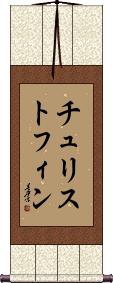
チュリストフィン is the name Christophine in Japanese (Katakana).
Note: Because this title is entirely Japanese Katakana, it should be written by a Japanese calligrapher.
Christov
克里斯托夫 is the name Christov in Chinese (Mandarin).
Christov
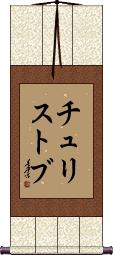
チュリストブ is the name Christov in Japanese (Katakana).
Note: Because this title is entirely Japanese Katakana, it should be written by a Japanese calligrapher.
Christy
克里斯蒂 is the name Christy in Chinese (Mandarin).
Christy
クリスチ is the name Christy in Japanese.
Note: Because this title is entirely Japanese Katakana, it should be written by a Japanese calligrapher.
Gilchrist
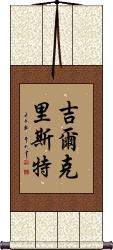
吉爾克里斯特 is the name Gilchrist in Chinese (Mandarin).
Gilchrist

ギルクリスト is the name Gilchrist in Japanese Katakana.
Note: Because this title is entirely Japanese Katakana, it should be written by a Japanese calligrapher.
Christ
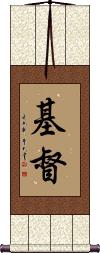
基督 is how to write “Christ” in Chinese characters, Korean Hanja, and Japanese Kanji.
This is the word used in the Chinese Union Bible (the only readily-available translation of the Bible into Chinese that I know of - published about 100 years ago). For Chinese Christians, this is the most common way to refer to Jesus Christ.
This is also the way that “Christ” is written in Japanese. But since the Japanese language is very flexible about the sounds that can be assigned to various Kanji, these characters have been assigned a pronunciation that sounds a lot like “Christ” or actually closer to the original “Christos.” In Japanese (if you don't know how the Romaji shown above in the gray box works), it sounds like “key ree sue toe” using English words/sounds. Say those four words fast, and you'll get it.
It should be noted that only Japanese Christians will be familiar with this word.
This is best defined, read, and understood with the characters together, but if you take this word for Christ apart, the first character means “fundamentals” or “foundation.” The second character can mean “leader” or “boss.”
Jesus Christ is my Savior
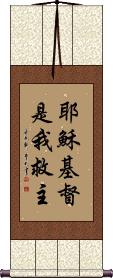
耶稣基督是我救主 is a Chinese phrase that reads “Jesus Christ is my savior.”
Jesus Christ is My Savior
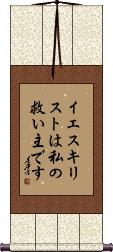
イエスキリストは私の救い主です is a Japanese phrase that means “Jesus Christ is my savior.”
Note: Because this selection contains some special Japanese Hiragana and Katakana characters, it should be written by a Japanese calligrapher.
Jesus Christ
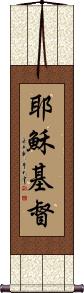
耶穌基督 is the full version, with the name “Jesus” being the first two characters and the meaning of “Christ” as the last two.
You can't get more specific than this when referring to the Messiah.
Jesus Christ is Love
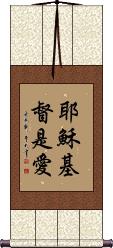
耶穌基督是愛 means Jesus Christ is Love in Mandarin Chinese.
耶稣 means Jesus, close to the original pronunciation of Yeshua.
基督 is the Chinese word that means Christ.
是 = is.
爱 = love.
Marie-Christine
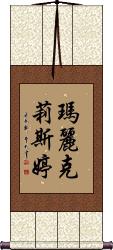
This is a common Mandarin Chinese transliteration for the female French name Marie-Christine.
Marie-Christine
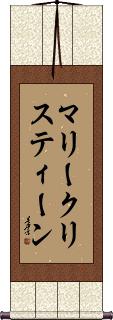
マリークリスティーン is the name Marie-Christine or Mariechristine in Japanese (Katakana).
Note: Because this title is entirely Japanese Katakana, it should be written by a Japanese calligrapher.
Merry Christmas
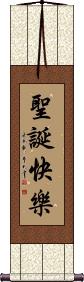
聖誕快樂 is “Merry Christmas” in Chinese.

Successful Chinese Character and Japanese Kanji calligraphy searches within the last few hours...



