Many custom options...


And formats...



Confuse in Chinese / Japanese...
Buy a Confuse calligraphy wall scroll here!
Personalize your custom “Confuse” project by clicking the button next to your favorite “Confuse” title below...
Shidokan
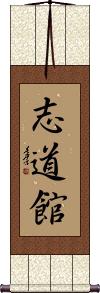
志道館 is the Japanese title Shidōkan (sometimes pronounced Kokorozashi-do-kan).
志道館 is often associated with Shorin-ryu Shidokan (小林流志道館). Do not confuse this title with the newer 士道館 which is also romanized as Shidōkan.
Crazy / Mad / Wild
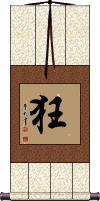
狂 is a single character that means “crazy” in Chinese, Japanese Kanji, and old Korean Hanja.
狂 means crazy, unrestrained, lunatic, insane, confused, deranged, wild, or mad.
This can also refer to an extreme enthusiast (like a football fan). But then, it can also refer to a person possessing a mental abnormality.
In some contexts, this can mean conceited (it probably won't be read that way on a wall scroll).
A warning: 狂 is an odd selection for a wall scroll. You should only order this if you plan to bewilder or confuse those who see it. It kind of says something about you, something that most native Asian people will not view in a good light.
Bonsai / Penzai
Dwarf Tree Culture
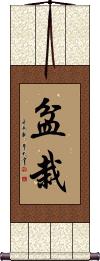
盆栽 is the word that refers to the culture, hobby, and to miniature trees themselves that have become popular around the world.
Like many things, this art migrated from China to Japan some time ago, but we tend to associate it with Japanese culture and even use the Japanese word in English.
Granted, in the present day, this hobby seems to be more popular in Japan but still has a great following in China and even a little in Korea as well.
Note: Many people confuse the title of the bonsai tree with “banzai” which is a form of “hooray” in Japanese. I have also seen it misspelled as “bansai.” The correct Romanization (Romaji) is “bonsai.”
Banzai / Wansui
Old Japanese / Traditional Chinese & Korean
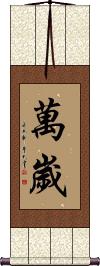
萬歲 is the traditional Chinese, Korean Hanja, and ancient Japanese way of writing banzai.
In modern times, the first character was simplified in Japan and China. So you might want to select the other entry for universal readability.
While it has become a popular, if not an odd, thing to scream as you jump out of an airplane (preferably with a parachute attached), banzai is actually a very old Asian way to say “hooray.” The Japanese word “banzai” comes from the Chinese word “wan sui,” which means “The age of 10,000 years.” It is actually a wish that the Emperor or the Empire live that long.
Imagine long ago when the Emperor made a rare public appearance. 萬歲 is what all people would yell to their leader in respect.
So if you like it as a hooray, or you want to wish someone that they live for 10,000 years, this is the calligraphy for you.
Other translations include Cheers! (not the drinking kind), hurrah!, long live [name]!, and congratulations!
To other things with banzai in their names, I am still waiting for the promised sequel to Buckaroo Banzai.
Notes: Sometimes people confuse banzai with bonsai. A bonsai is a miniature tree. They have nothing to do with each other.
Tea Fate
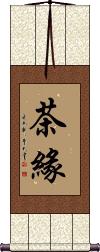
茶緣 is a special title for the tea lover. This kind of means “tea fate,” but it's more spiritual and hard to define. Perhaps the tea brought you in to drink it. Perhaps the tea will bring you and another tea-lover together. Perhaps you were already there, and the tea came to you. Perhaps it's the ah-ha moment you will have when drinking the tea.
I've been told not to explain this further, as it will either dilute or confuse the purposefully-ambiguous idea embedded in this enigma.
I happen to be the owner of a piece of calligraphy written by either the son or nephew of the last emperor of China, which is the title he wrote. It was given to me at a Beijing tea house in 2001. 茶緣 is where I learned to love tea after literally spending weeks tasting and studying everything I could about Chinese tea. I did not understand the significance of the authorship or the meaning of the title at all. Some 10 years later, I realized the gift was so profound and had such providence. Only now do I realize the value of a gift that it is too late to give proper thanks for. It was also years later that I ended up in this business and could have the artwork properly mounted as a wall scroll. It has been borrowed for many exhibitions and shows and always amazes native Chinese and Taiwanese who read the signature. This piece of calligraphy I once thought was just a bit of ink on a thin and wrinkled piece of paper, is now one of my most valued possessions. And fate has taught me to be more thankful for seemingly simple gifts.
Banzai
Modern Japanese Version
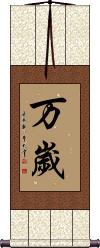
万歲 is the modern Japanese way to write banzai.
We've made two almost identical entries for this word, with just a variation on the first character. In the last century, 萬 was simplified to 万 in Japan and China. The new generation will expect it to be written as 万 but the old generation can still read the more traditional 萬 form. You must make your determination as to what version is best for you. If your audience is mostly Japanese, I suggest 万歲.
While it has become a popular, if not an odd, thing to scream as you jump out of an airplane (preferably with a parachute attached), banzai is actually a very old Asian way to say “hooray.” The Japanese word “banzai” comes from the Chinese word “wan sui” which means “The age of 10,000 years.” It is actually a wish that the Emperor or the Empire live that long.
Imagine long ago when the Emperor made a rare public appearance. This is what all of the people would yell to their leader in respect.
So if you like it as a hooray, or you want to wish someone that they live for 10,000 years, this is the calligraphy for you.
To other things with banzai in their names, I am still waiting for the promised sequel to Buckaroo Banzai.
Other translations: hurrah, long life, congratulations, cheers, live long.
Notes: Sometimes people confuse banzai with bonsai. A bonsai is a miniature tree. They have nothing to do with each other. Further, Bonzai is not a word at all - although it would make a great name for a calcium supplement for older people.
Life Energy / Spiritual Energy
Chi Energy: Essence of Life / Energy Flow
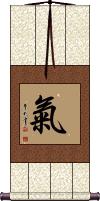
This 氣 energy flow is a fundamental concept of traditional Asian culture.
氣 is romanized as “Qi” or “Chi” in Chinese, “Gi” in Korean, and “Ki” in Japanese.
Chi is believed to be part of everything that exists, as in “life force” or “spiritual energy.” It is most often translated as “energy flow” or literally as “air” or “breath.” Some people will simply translate this as “spirit,” but you must consider the kind of spirit we're talking about. I think this is weighted more toward energy than spirit.
The character itself is a representation of steam (or breath) rising from rice. To clarify, the character for rice looks like this: 
Steam was apparently seen as visual evidence of the release of “life energy” when this concept was first developed. The Qi / Chi / Ki character is still used in compound words to mean steam or vapor.
The etymology of this character is a bit complicated. It's suggested that the first form of this character from bronze script (about 2500 years ago) looked like these samples: 

However, it was easy to confuse this with the character for the number three. So the rice radical was added by 221 B.C. (the exact time of this change is debated). This first version with the rice radical looks like this: 
The idea of Qi / Chi / Ki is really a philosophical concept. It's often used to refer to the “flow” of metaphysical energy that sustains living beings. Yet there is much debate that has continued for thousands of years as to whether Qi / Chi / Ki is pure energy or consists partially or fully of matter.
You can also see the character for Qi / Chi / Ki in common compound words such as Tai Chi / Tai Qi, Aikido, Reiki, and Qi Gong / Chi Kung.
In the modern Japanese Kanji, the rice radical has been changed into two strokes that form an X.
 The original and traditional Chinese form is still understood in Japanese, but we can also offer that modern Kanji form in our custom calligraphy. If you want this Japanese Kanji, please click on the character to the right instead of the “Select and Customize” button above.
More language notes: This is pronounced like “chee” in Mandarin Chinese, and like “key” in Japanese.
This is also the same way to write this in Korean Hanja where it is Romanized as “gi” and pronounced like “gee” but with a real G-sound, not a J-sound.
Though Vietnamese no longer use Chinese characters in their daily language, this character is still widely known in Vietnam.
See Also: Energy | Life Force | Vitality | Life | Birth | Soul
These search terms might be related to Confuse:
A Wise Person Reflecting a Thousand Times Can Still Make a Mistake
Accept Your Mistake and Move On
Enigma / Puzzle / Riddle
Not the results for confuse that you were looking for?
Below are some entries from our dictionary that may match your confuse search...
| Characters If shown, 2nd row is Simp. Chinese |
Pronunciation Romanization |
Simple Dictionary Definition |
迷 see styles |
mí mi2 mi mei |
More info & calligraphy: Lost / Dazed and Confusedmāyā; delude, deceive, confuse, mislead; delusion, illusion, etc. |
惑 see styles |
huò huo4 huo waku わく |
to confuse; to be puzzled {Buddh} (See 煩悩・ぼんのう・2) klesha; (given name) Waku moha. Illusion, delusion, doubt, unbelief; it is also used for kleśa, passion, temptation, distress, care, trouble. |
繞 绕 see styles |
rào rao4 jao hanabusa はなぶさ |
to wind; to coil (thread); to rotate around; to spiral; to move around; to go round (an obstacle); to by-pass; to make a detour; to confuse; to perplex (kana only) (e.g. 道, 起) kanji radical that runs from the left to the bottom part of the kanji; kanji enclosure-type radical; (personal name) Hanabusa To wind round, go round. |
亂意 乱意 see styles |
luàn yì luan4 yi4 luan i ran'i |
to confuse the mind |
弄亂 弄乱 see styles |
nòng luàn nong4 luan4 nung luan |
to mess up; to put into disorder; to meddle with; to confuse |
弄混 see styles |
nòng hún nong4 hun2 nung hun |
to confuse (fail to differentiate) |
搞亂 搞乱 see styles |
gǎo luàn gao3 luan4 kao luan |
to mess up; to mismanage; to bungle; to confuse; to muddle |
搞混 see styles |
gǎo hùn gao3 hun4 kao hun |
to confuse; to muddle; to mix up |
模糊 see styles |
mó hu mo2 hu5 mo hu moko もこ |
vague; indistinct; fuzzy; to blur; to obscure; to confuse; to mix up (adj-t,adv-to) dim; vague; indistinct; faint; obscure |
淆亂 淆乱 see styles |
xiáo luàn xiao2 luan4 hsiao luan |
to confuse; to befuddle |
混同 see styles |
hùn tóng hun4 tong2 hun t`ung hun tung kondou / kondo こんどう |
to mix up; to confuse one thing with another (noun, transitive verb) confusion; mixing; merger |
混淆 see styles |
hùn xiáo hun4 xiao2 hun hsiao konkou / konko こんこう |
to obscure; to confuse; to mix up; to blur; to mislead (noun/participle) (1) mixture; intermixture; mixing up; jumbling together; (2) (linguistics terminology) contamination; creation of unorthodox words or phrases by combining terms of similar form or meaning |
熒惑 荧惑 see styles |
yíng huò ying2 huo4 ying huo keikoku; keiwaku; keigoku / kekoku; kewaku; kegoku けいこく; けいわく; けいごく |
to bewilder; to dazzle and confuse; the planet Mars (1) (abbreviation) (archaism) (See 熒惑星) Mars (planet); (2) (archaism) dazzlement; bewilderment; daze |
迷惑 see styles |
mí huo mi2 huo5 mi huo meiwaku / mewaku めいわく |
to puzzle; to confuse; to baffle (noun or adjectival noun) (1) trouble; bother; annoyance; nuisance; inconvenience; (vs,vi) (2) to be troubled (by); to be bothered (by); to be inconvenienced (by) Deluded and confused, deceived in regard to reality. |
魅す see styles |
bakasu ばかす |
(transitive verb) to bewitch; to confuse; to enchant; to delude |
化かす see styles |
bakasu ばかす |
(transitive verb) to bewitch; to confuse; to enchant; to delude |
猫騙し see styles |
nekodamashi ねこだまし |
{sumo} slapping hands in front of the opponent's face to confuse him |
紛える see styles |
magaeru まがえる |
(transitive verb) (archaism) to imitate; to confuse |
迷人咒 see styles |
mí rén zhòu mi2 ren2 zhou4 mi jen chou meinin ju |
Incantations to delude or confuse others. |
間違う see styles |
machigau まちがう |
(v5u,vi) (1) (as 間違っている or 間違った) to be mistaken; to be incorrect; to be wrong; (transitive verb) (2) to make a mistake (in); to do incorrectly; to get wrong; (transitive verb) (3) to mistake (one thing with another); to confuse |
取違える see styles |
torichigaeru とりちがえる |
(transitive verb) (1) to mistake one thing for another; to mix up two things; to confuse two things; to take by mistake; (2) to misunderstand; to misapprehend |
張冠李戴 张冠李戴 see styles |
zhāng guān lǐ dài zhang1 guan1 li3 dai4 chang kuan li tai |
lit. to put Zhang's hat on Li's head; to attribute something to the wrong person (idiom); to confuse one thing with another |
混淆是非 see styles |
hùn xiáo shì fēi hun4 xiao2 shi4 fei1 hun hsiao shih fei |
to confuse right and wrong (idiom) |
混淆黑白 see styles |
hùn xiáo hēi bái hun4 xiao2 hei1 bai2 hun hsiao hei pai |
to confuse black and white; to say that black is white; fig. not to distinguish right from wrong |
混為一談 混为一谈 see styles |
hùn wéi yī tán hun4 wei2 yi1 tan2 hun wei i t`an hun wei i tan |
to confuse one thing with another (idiom); to muddle |
烟に巻く see styles |
kemurinimaku けむりにまく kemunimaku けむにまく |
(exp,v5k) to confuse someone; to befuddle someone; to create a smokescreen |
煙に巻く see styles |
kemurinimaku けむりにまく kemunimaku けむにまく |
(exp,v5k) to confuse someone; to befuddle someone; to create a smokescreen |
狂わせる see styles |
kuruwaseru くるわせる |
(transitive verb) (1) to drive mad; to upset; to disturb; to confuse; (transitive verb) (2) to cause a malfunction; to throw out of kilter; to put out of order; to derail; to detune (e.g. instrument) |
眾口鑠金 众口铄金 see styles |
zhòng kǒu shuò jīn zhong4 kou3 shuo4 jin1 chung k`ou shuo chin chung kou shuo chin |
lit. public opinion is powerful enough to melt metal (idiom); fig. public clamor can obscure the actual truth; mass spreading of rumors can confuse right and wrong |
間違える see styles |
machigaeru まちがえる |
(transitive verb) (1) to make a mistake (in); to commit an error; to get wrong; to do incorrectly; (transitive verb) (2) to mistake (one thing for another); to confuse |
Click here for more confuse results from our dictionary
The following table may be helpful for those studying Chinese or Japanese...
| Title | Characters | Romaji (Romanized Japanese) | Various forms of Romanized Chinese | |
| Shidokan | 志道館 | shi dou kan shidoukan shi do kan | ||
| Crazy Mad Wild | 狂 狂 | kyou / kyo | kuáng / kuang2 / kuang | k`uang / kuang |
| Bonsai Penzai | 盆栽 | bon sai / bonsai | pén zāi / pen2 zai1 / pen zai / penzai | p`en tsai / pentsai / pen tsai |
| Banzai Wansui | 萬歲 万岁 | banzai / manzai | wàn suì / wan4 sui4 / wan sui / wansui | |
| Tea Fate | 茶緣 茶缘 | chá yuán / cha2 yuan2 / cha yuan / chayuan | ch`a yüan / chayüan / cha yüan | |
| Banzai | 万歲 / 萬歲 万岁 | banzai | wàn suì / wan4 sui4 / wan sui / wansui | |
| Life Energy Spiritual Energy | 氣 气 / 気 | ki | qì / qi4 / qi | ch`i / chi |
| In some entries above you will see that characters have different versions above and below a line. In these cases, the characters above the line are Traditional Chinese, while the ones below are Simplified Chinese. | ||||

Successful Chinese Character and Japanese Kanji calligraphy searches within the last few hours...



