Many custom options...


And formats...



Grow in Chinese / Japanese...
Buy a Grow calligraphy wall scroll here!
Personalize your custom “Grow” project by clicking the button next to your favorite “Grow” title below...
Plant / Grow / Cultivate
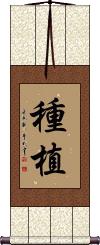
種植 means to plant, to grow (a crop), or to cultivate.
This can also be a name that is romanized as Tanae in Japanese.
Birth / Life
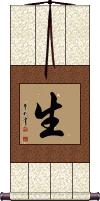
生 is a Chinese word that means “to be born” and “to give birth.”
Also, it's often used to refer to life itself, and sometimes “to grow.”
生 is used in a lot of compound words such as “yi sheng,” which means “doctor” (literally “healer of life”), “sheng ri” which means “birthday” (literally “birth-day”), and “xue sheng” which means student (literally “studying life” or “learner [about] life”). Few Chinese people will think of the literal meaning when this uses words like doctor and student - but it is interesting to note.
生 has the same root meaning in Korean Hanja and Japanese. However, in Japanese, there are many possible pronunciations, and this can be used to mean “raw” or “unprocessed” (as in draft beer). Therefore, not be the best if your audience is Japanese.
See Also: Vitality
Hold Hands with You, Grow Old with You
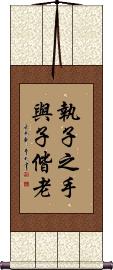
執子之手, 與子偕老 is a sweet Chinese phrase that means “Hold hands with you, grow old with you.”
Even The 100-Foot Bamboo Can Grow One More Foot
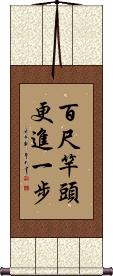
百尺竿头更进一步 is a proverb that literally translates as: [Even a] one-hundred foot [tall] bamboo [can] progress even one [more] step.
Figuratively, this means: After having achieved a fair degree of success, one should try to do still better.
Growing Old Together
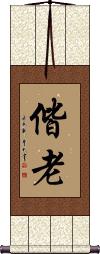
偕老 is a Chinese, Japanese, and Korean word that means to grow/growing old together.
This will be a nice wall scroll to hang in your home if your plan is to grow old with your mate.
These search terms might be related to Grow:
Not the results for grow that you were looking for?
Below are some entries from our dictionary that may match your grow search...
| Characters If shown, 2nd row is Simp. Chinese |
Pronunciation Romanization |
Simple Dictionary Definition |
生 see styles |
shēng sheng1 sheng yanao やなお |
More info & calligraphy: Birth / Life(n,n-suf) (See 芝生) area of thick growth (of trees, grass, etc.); (surname) Yanao jāti 惹多; life; utpāda means coming forth, birth, production; 生 means beget, bear, birth, rebirth, born, begin, produce, life, the living. One of the twelve nidānas, 十二因緣; birth takes place in four forms, catur yoni, v. 四生, in each case causing: a sentient being to enter one of the 六道 six gati, or paths of transmigration. |
偕老 see styles |
xié lǎo xie2 lao3 hsieh lao kairou / kairo かいろう |
More info & calligraphy: Growing Old Togethergrowing old together |
盆栽 see styles |
pén zāi pen2 zai1 p`en tsai pen tsai bonsai ぼんさい |
More info & calligraphy: Bonsai / Penzaibonsai; miniature potted plant; (place-name) Bonsai |
種植 种植 see styles |
zhòng zhí zhong4 zhi2 chung chih tanae たなえ |
More info & calligraphy: Plant / Grow / Cultivate(personal name) Tanae |
クロー see styles |
guroo グロー |
(personal name) Grow |
カサック see styles |
kasakku カサック |
(v5k,vi) (See カサカサ・1) to dry up; to grow dry; to lose moisture; (personal name) Kassak |
生老病死 see styles |
shēng lǎo bìng sǐ sheng1 lao3 bing4 si3 sheng lao ping ssu shouroubyoushi / shorobyoshi しょうろうびょうし |
More info & calligraphy: Birth Old-Age Sickness Death(yoji) {Buddh} the four inevitables in human life (birth, aging, sickness, and death) Birth, age, sickness, death, the 四苦 four afflictions that are the lot of every man. The five are the above four and 苦 misery, or suffering. |
栽 see styles |
zāi zai1 tsai sai さい |
to plant; to grow; to insert; to erect (e.g. a bus stop sign); to impose something on sb; to stumble; to fall down (surname) Sai |
殖 see styles |
zhí zhi2 chih shigeru しげる |
to grow; to reproduce (given name) Shigeru plant |
滋 see styles |
zī zi1 tzu masa まさ |
to grow; to nourish; to increase; to cause; juice; taste; (dialect) to spout; to spurt (personal name) Masa more and more |
秀 see styles |
xiù xiu4 hsiu minoru みのる |
(bound form) refined; elegant; graceful; beautiful; (bound form) superior; excellent; (loanword) show; (literary) to grow; to bloom; (of grain crops) to produce ears (on a scale measuring quality, results, etc.; higher than 優) preeminence; supremacy; distinction; excellence; (given name) Minoru |
種 种 see styles |
zhòng zhong4 chung tanezaki たねざき |
to plant; to grow; to cultivate (1) seed (e.g. of a plant); pip; kernel; stone (e.g. of a peach); (2) progeny; offspring; issue; breed; (3) (See 胤) paternal blood; lineage; (4) sperm; semen; seed; (5) cause; source; seed; origin; (6) material (e.g. for an article); matter (e.g. of a story); subject (of discussion); theme; (news) copy; source (of a story); (7) {food} ingredient; main ingredient (of a piece of sushi); leaven; (8) mechanism (of a magic trick, etc.); secret; trickery; (9) (kana only) {hanaf} (oft. as タネ) 10-point card; tane; animal card; (surname) Tanezaki vīja; bīja. Seed, germ; sort, species; also to sow, plant. |
蒔 莳 see styles |
shì shi4 shih maki まき |
(literary) to grow; (literary) to transplant; Taiwan pr. [shi2] (surname, female given name) Maki |
蓄 see styles |
xù xu4 hsü izawa いざわ |
to store up; to grow (e.g. a beard); to entertain (ideas) (personal name) Izawa to store up |
長 长 see styles |
zhǎng zhang3 chang michi みち |
chief; head; elder; to grow; to develop; to increase; to enhance (1) head; chief; leader; elder; (2) (See 短・1) merit; strong point; (3) superiority; (4) {music} (See 短・2) major; (surname) Michi chang, long; always; zhang, to grow, rising, senior. |
镸 see styles |
cháng chang2 ch`ang chang |
"long" or "to grow" radical in Chinese characters (Kangxi radical 168) |
隆 see styles |
lóng long2 lung riyuu / riyu りゆう |
grand; intense; prosperous; to swell; to bulge (personal name) Riyū to grow |
一地 see styles |
yī dì yi1 di4 i ti ichiji いちぢ |
(personal name) Ichiji The one ground; the same ground; the Buddha-nature of all living beings i.e. as all the plants grow out of the one ground, so all good character and works grow from the one Buddha-nature. |
作る see styles |
tsukuru つくる |
(transitive verb) (1) to make; to produce; to manufacture; to build; to construct; (2) to prepare (food term); to brew (alcohol); (3) to raise; to grow; to cultivate; to train; (4) to till; (5) to draw up (a document); to make out; to prepare; to write; (6) to create (an artistic work, etc.); to compose; (7) to coin (a phrase); to organize; to organise; to establish; to found; (8) to have (a child); (9) to make up (one's face, etc.); (10) to fabricate (an excuse, etc.); (11) to form (a line, etc.); (12) to set (a record); (13) to commit (a sin, etc.) |
來る see styles |
kuru くる |
(out-dated kanji) (vk,vi) (1) to come (spatially or temporally); to approach; to arrive; (vk,vi,aux-v) (2) to come back; to do ... and come back; (3) to come to be; to become; to get; to grow; to continue; (vk,vi) (4) to come from; to be caused by; to derive from; (5) to come to (i.e. "when it comes to spinach ...") |
出息 see styles |
chū xi chu1 xi5 ch`u hsi chu hsi shussoku |
future prospects; profit; to mature; to grow up To breathe out. |
出落 see styles |
chū luò chu1 luo4 ch`u lo chu lo |
to grow (prettier etc); to mature into; to blossom |
創る see styles |
tsukuru つくる |
(transitive verb) (1) to make; to produce; to manufacture; to build; to construct; (2) to prepare (food term); to brew (alcohol); (3) to raise; to grow; to cultivate; to train; (4) to till; (5) to draw up (a document); to make out; to prepare; to write; (6) to create (an artistic work, etc.); to compose; (7) to coin (a phrase); to organize; to organise; to establish; to found; (8) to have (a child); (9) to make up (one's face, etc.); (10) to fabricate (an excuse, etc.); (11) to form (a line, etc.); (12) to set (a record); (13) to commit (a sin, etc.) |
勃興 勃兴 see styles |
bó xīng bo2 xing1 po hsing bokkou / bokko ぼっこう |
to rise suddenly; to grow vigorously (n,vs,vi) sudden rise to power; sudden rise in prosperity |
募る see styles |
tsunoru つのる |
(v5r,vi) (1) to become stronger; to grow in intensity; to grow violent; to become worse; (transitive verb) (2) to invite contributions, etc.; to solicit help, participation, etc.; to recruit (e.g. soldiers) |
厭背 厌背 see styles |
yàn bèi yan4 bei4 yen pei enbai |
to grow weary of (affliction) |
地栽 see styles |
dì zāi di4 zai1 ti tsai |
to grow in open ground (as opposed to pot cultivation 盆栽[pen2 zai1]) |
増す see styles |
masu ます |
(transitive verb) to increase; to grow |
增多 see styles |
zēng duō zeng1 duo1 tseng to |
to increase; to grow in number |
增長 增长 see styles |
zēng zhǎng zeng1 zhang3 tseng chang zōjō |
to grow; to increase Increasing both broad and long, 增 referring to breadth and 長 to height, or length. |
Click here for more grow results from our dictionary
The following table may be helpful for those studying Chinese or Japanese...
| Title | Characters | Romaji (Romanized Japanese) | Various forms of Romanized Chinese | |
| Plant Grow Cultivate | 種植 种植 | tanae | zhòng zhí zhong4 zhi2 zhong zhi zhongzhi | chung chih chungchih |
| Birth Life | 生 | shou / iku / sho / iku | shēng / sheng1 / sheng | |
| Hold Hands with You, Grow Old with You | 執子之手與子偕老 执子之手与子偕老 | zhí zǐ zhī shǒu yǔ zǐ xié lǎo zhi2 zi3 zhi1 shou3 yu3 zi3 xie2 lao3 zhi zi zhi shou yu zi xie lao zhizizhishouyuzixielao | chih tzu chih shou yü tzu hsieh lao | |
| Even The 100-Foot Bamboo Can Grow One More Foot | 百尺竿頭更進一步 百尺竿头更进一步 | bǎi chǐ gān tóu gèng jìng yī bù bai3 chi3 gan1 tou2 geng4 jing4 yi1 bu4 bai chi gan tou geng jing yi bu baichigantougengjingyibu | pai ch`ih kan t`ou keng ching i pu pai chih kan tou keng ching i pu |
|
| Growing Old Together | 偕老 | kairou / kairo | xié lǎo / xie2 lao3 / xie lao / xielao | hsieh lao / hsiehlao |
| In some entries above you will see that characters have different versions above and below a line. In these cases, the characters above the line are Traditional Chinese, while the ones below are Simplified Chinese. | ||||

Successful Chinese Character and Japanese Kanji calligraphy searches within the last few hours...



