Many custom options...


And formats...



Itsu in Chinese / Japanese...
Buy an Itsu calligraphy wall scroll here!
Personalize your custom “Itsu” project by clicking the button next to your favorite “Itsu” title below...
Switched to secondary search mode due to lack of results using primary.
These secondary results may not be very accurate. Try a different but similar meaning word or phrase for better results. Or...
Look up Itsu in my Japanese Kanji & Chinese Character Dictionary(My dictionary is a different system then the calligraphy search you just tried)
If you want a special phrase, word, title, name, or proverb, feel free to contact me, and I will translate your custom calligraphy idea for you.
8. Kyojitsu: Falsehood and Truth
9. Kyusho Jitsu
10. Nihon Jujitsu
12. Ritsu
17. Shitsuke
18. Zuihitsu
Black Dragon Ninjitsu

This is the Japanese martial arts title Black Dragon Ninjitsu or Black Dragon Ninjutsu in Kanji.
Bojutsu / Bojitsu
The art of using a stick as a weapon
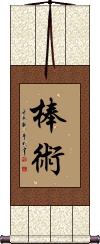
棒術 is the title Bōjutsu (though some use the romanization Bojitsu).
棒術 is a martial art centered around using a “bō” or staff as a weapon.
This title is a combination of the Japanese word “bō” (which means staff, stick, club, rod, pole, or cudgel) with the Japanese word “jutsu” (which means art or technique).
While this word can be pronounced in Chinese (bang shu), it's not a common term in China. Please consider this title to be “Japanese only.”
Bujinkan Ninjitsu
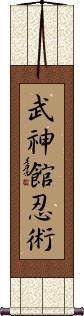
武神館忍術 is the martial arts title Bujinkan Ninjitsu in Japanese.
Chowa-Ryu Jujitsu
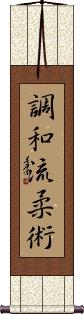
調和流柔術 is the title for Chowa-Ryu Jujitsu.
This roughly translates as harmonious-flow Jujitsu.
The first two characters are sometimes romanized as chōwa, chouwa, chowa, or cho-wa.
Kung / Gong / Mitsugi
Surname
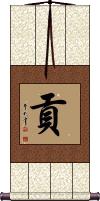
貢 is a Chinese surname that can romanize as Gong from Mandarin or Kung from Cantonese.
In Japan, this can be the surname or given name Mitsugi.
The meaning of this is tribute or gifts.
Jujitsu / Jujutsu
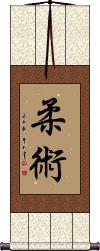
柔術 has been somewhat incorrectly spelled and pronounced “Jujitsu” for some time in the English-speaking world. The correct Japanese Romaji is Jujutsu or Juujutsu.
A little background on the word: By combining the Kanji pronounced “Ju” (which means flexible, pliable, gentle, yielding) with the Kanji pronounced “Jutsu” (which means art or technique), we get a meaning that can be translated as “flexible technique,” “gentle art” or “yielding technique.”
柔術 does make sense in Chinese as well, although pronounced “rou shu” in China.
The Jujutsu system has a history in Japan that started well before the 1600s. Some see this style as a variation of the “Empty Hand Method” (Karate-do). Even the samurai of old used some Jujutsu methods in defending themselves with their unarmed hands against weapons that could pierce their heavy armor.
There are convoluted relationships between various schools and systems of martial arts, but it's generally accepted that Jujutsu led to the development of Judo and a few other variations.
Kenjutsu / Kenjitsu
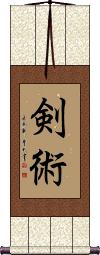
In Japanese, the modern definition, using simple terms, 剣術 is “A martial art involving swords” or “The art of the sword.”
However, in Chinese, this is the word for fencing (as in the Olympic sport).
I will suppose that you want this for the Japanese definition, which comes from skills and techniques developed in the 15th century. At that time, Kenjutsu (or swordsmanship) was a strictly military art taught to Samurai and Bushi (soldiers). The fact that swords are rarely used in military battles anymore, and with the pacification of Japan after WWII, Kenjutsu is strictly a ceremonial practice often studied as a form of martial art (more for the discipline aspect rather than practical purpose).
Language note: The Korean definition is close to the Japanese version described above. However, it should be noted that this can mean “fencing” depending on the context in Japanese, Chinese, and Korean.

 Character variation notes: There are slight variations possible with the second character. Either way is correct and understood by both Japanese and Chinese folks.
Since there are about 5 common ways to write the sword character, if you are particular about which version you want, please note that in the “special instructions” when you place your order.
Romanization note: This term is often Romanized as Kenjitsu; however, following the rules of Japanese Romaji, it should be Kenjutsu.
Kyojitsu: Falsehood and Truth
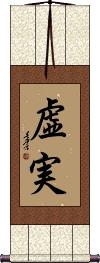
虚実 is a Japanese word that means “falsehood [and] truth” or “fiction [and] fact.”
This concept is used in warfare, gameplay, and martial arts strategies. 虚実 can be a strategy of real and/or deceptive moves. This gets to some Sun Tzu Art of War stuff where in warfare a strategic move is either a real and serious move or it is a deceptive blow.
Let's explore each character in more depth:
虚 was originally written 虛 (there is a very subtle difference in the strokes at the bottom of the character) and means unpreparedness, falsehood, emptiness, void, abstract theory, empty or unoccupied, diffident or timid, false, humble or modest, virtual, or in vain.
In the Buddhist context, 虛 represents the Pali/Sanskrit word “śūnya,” meaning empty, vacant, unreal, unsubstantial, untrue, space, humble, or in vain.
In ancient Eastern/Chinese astronomy, 虛 represents the “Emptiness” constellation (one of the 28 mansions in the sky).
実 was originally 實 in Chinese (they currently write it as 实 in Simplified Chinese) with the meaning, truth, reality, sincerity, honesty, fidelity, and substance.
The Buddhist context is similar, adding real, true, honest, really, solid, definitely, sincere, solid, fixed, full, to fill, fruit, kernel, verily, in fact, the supreme fact, or ultimate reality to the definition.
Kyusho Jitsu

Kyusho Jitsu is a Japanese martial art focused on striking or manipulating vital pressure points (Kyusho) on the body to cause pain, disorientation, or incapacitation for self-defense, using minimal force by targeting nerve clusters and sensitive areas.
If you translated very literally, you get, “sensitive/urgent place/area technique.”
I have included pronunciation for Chinese and Korean, but it's really a Japanese title.
Nihon Jujitsu

This is the martial arts title Nihon Jujitsu or Nihon Jujutsu in Japanese Kanji.
The literal meaning is Japan(ese) Jujitsu.
Ninjutsu / Ninjitsu
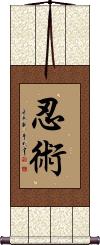
忍術 is the “art of the ninja” in Japanese. Most Japanese people associate ninjas with romance and reverence for Japan's ancient past. But most will accept that the ninja is an idea or way of life whose time has passed. However, this has not stopped floods of movies about ninjas and dojos offering Ninjutsu training from keeping the idea of the ninja alive in modern times.
My modern Japanese dictionary defines this as “assassination, stealth, and combat techniques” or “fighting art of the ninja.”
 Note that when writing this as Kanji, Japanese tend to write the first character in the form shown to the right. Because this is specifically a Japanese title, we only suggest a Japanese calligrapher for this selection - and you will get the form shown to the right if you do that (please ignore the fact that some of the images you see during the following pages in the options process will be the Chinese/alternate form).
Ritsu
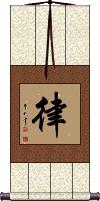
While this character literally means law, regulation or rules, it's also a surname Lü in Chinese and name Ritsu in Japanese.
In more ancient times (and for some people still), this can refer to East Asian criminal code, or vinaya (rules for the monastic community). For Japanese Buddhists, this can be the Ritsu school.
In some context, this can refer to certain musical scales used in Asia.
Shiken Haramitsu Daikomyo
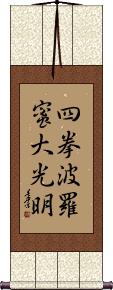
四拳波羅蜜大光明 is “shiken haramitsu daikōmyō,” a famous Japanese Buddhist mantra.
四拳 = shi-ken = four fists (many translate this as “four hearts”).
波羅蜜 = ha-ra-mitsu = A loanword representing pāramitā, or entrance into Nirvana. Awkwardly, it also means jackfruit.
大光明 = dai-kou-myo = big/great light bright (great bright light).
Shiken represents four hearts:
1. The Merciful Heart - Love and caring for all living things.
2. The Sincere Heart - Pursues righteousness, or the right path - sincerely trying to do what is right.
3. The Attuned Heart - Knows that nature and fate have their ways, and thus stay in tune with the universe.
4. The Dedicated Heart - Steadfast on the chosen path to the end.
Shikin Haramitsu Daikomyo
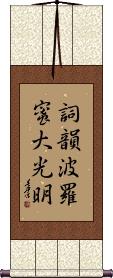
詞韻波羅蜜大光明 are the Japanese Kanji characters that romanize as “Shikin Haramitsu Daikōmyō.”
This is a complicated proverb. I'm actually going to forgo writing any translation information here. You can figure it out via Google search and at sites like Paramita and the Perfection of Wisdom or
Fecastel.Wordpress.com::Shikin Haramitsu Daikōmyō
Shinshin Toitsu Do
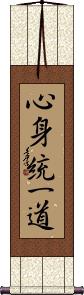
This is Shinshin-Tōitsu-Dō which is a Japanese version of Yoga.
心身統一道 means “Mind [and] Body Unification Way.”
Shitsujitsu Goken
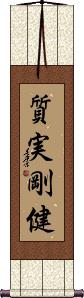
質実剛健 is a Japanese word that can mean “unaffected and sincere, with fortitude and vigor” or “simplicity and fortitude.”
The first two characters, 質実 mean simplicity or the “essence of something.”
The last two, 剛健, mean strength, fortitude, or strong composure.
Shitsuke

躾 is shitsuke which means to discipline, to train, training, or teach manners in Japanese.
躾 means the same thing in Chinese, but not as commonly used.
Zuihitsu

随筆 (Zuihitsu) is a Japanese genre of personal essays and miscellaneous writings, literally translating to “following the brush,” characterized by a spontaneous, stream-of-consciousness style. It combines fragmented observations, anecdotes, poetry, and lists, often with a “haphazard” feel that belies its careful crafting.
The following table may be helpful for those studying Chinese or Japanese...
| Title | Characters | Romaji (Romanized Japanese) | Various forms of Romanized Chinese | |
| Black Dragon Ninjitsu | 黒龍忍術 | koku ryuu nin jutsu kokuryuuninjutsu koku ryu nin jutsu | ||
| Bojutsu Bojitsu | 棒術 棒术 | bou jutsu / boujutsu / bo jutsu | bàng shù / bang4 shu4 / bang shu / bangshu | pang shu / pangshu |
| Bujinkan Ninjitsu | 武神館忍術 武神館忍术 | bu jin kan nin jutsu bujinkanninjutsu | ||
| Chowa-Ryu Jujitsu | 調和流柔術 调和流柔术 | chou wa ryuu ju jutsu chouwaryuujujutsu cho wa ryu ju jutsu | ||
| Kung Gong Mitsugi | 貢 贡 | mitsugi | gòng / gong4 / gong | kung |
| Jujitsu Jujutsu | 柔術 柔术 | juu jutsu / juujutsu / ju jutsu | róu shù / rou2 shu4 / rou shu / roushu | jou shu / joushu |
| Kenjutsu Kenjitsu | 剣術 剑术 | kenjutsu | jiàn shù / jian4 shu4 / jian shu / jianshu | chien shu / chienshu |
| Kyojitsu: Falsehood and Truth | 虚実 | kyo jitsu / kyojitsu | ||
| Kyusho Jitsu | 急所術 | kyū sho jutsu kyūshojutsu | jí suǒ shù / / | |
| Nihon Jujitsu | 日本柔術 | ni hon ju jutsu nihonjujutsu | ||
| Ninjutsu Ninjitsu | 忍術 忍术 | ninjutsu | rěn shù / ren3 shu4 / ren shu / renshu | jen shu / jenshu |
| Ritsu | 律 | ritsu | lǜ / lu:4 / lu: | lü |
| Shiken Haramitsu Daikomyo | 四拳波羅蜜大光明 | shi ken ha ra mitsu dai kou myou shi ken ha ra mitsu dai ko myo | ||
| Shikin Haramitsu Daikomyo | 詞韻波羅蜜大光明 词韵波罗蜜大光明 | shi kin ha ra mitsu dai kou myo shikinharamitsudaikoumyo shi kin ha ra mitsu dai ko myo | ||
| Shinshin Toitsu Do | 心身統一道 | shin shin tou itsu dou shinshintouitsudou shin shin to itsu do | ||
| Shitsujitsu Goken | 質実剛健 | shitsu jitsu gou ken shitsujitsugouken shitsu jitsu go ken | ||
| Shitsuke | 躾 | shitsuke | měi / mei3 / mei | |
| Zuihitsu | 隨筆 随筆 | zuihitsu | ||
| In some entries above you will see that characters have different versions above and below a line. In these cases, the characters above the line are Traditional Chinese, while the ones below are Simplified Chinese. | ||||

Successful Chinese Character and Japanese Kanji calligraphy searches within the last few hours...



