Many custom options...


And formats...



All Knowing in Chinese / Japanese...
Buy an All Knowing calligraphy wall scroll here!
Personalize your custom “All Knowing” project by clicking the button next to your favorite “All Knowing” title below...
Deities / Gods
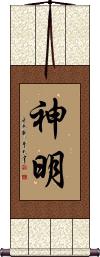
In Chinese, Japanese Kanji, and old Korean Hanja, 神明 title refers to deities or gods (can be the singular or plural form).
Depending on the context, this could also mean “divine.”
Specifically, in Japanese, this can refer to Amaterasu (as an enshrined deity).
In some Buddhist contexts, this also means deity but can also refer to “intelligence” (as in all-knowing).
Wisdom
(All-Knowing)
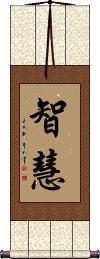
Beyond wisdom, 智慧 can be translated as knowledge, sagacity, sense, and intelligence.
The first character means “wise” or “smart,” and the second character means “intelligence.”
Note: 智慧 is used commonly in Chinese and is a less-common word in Japanese and Korean. If your audience is Japanese, I suggest our other Japanese wisdom option.
This means intellect or wisdom in Japanese too but is a more unusual way to write this word (though both versions are pronounced the same in Japanese).
See Also: Learn From Wisdom
Not the results for all knowing that you were looking for?
Below are some entries from our dictionary that may match your all knowing search...
| Characters If shown, 2nd row is Simp. Chinese |
Pronunciation Romanization |
Simple Dictionary Definition |
知 see styles |
zhī zhi1 chih tomoko ともこ |
More info & calligraphy: Realization and Knowledge(1) wisdom; (2) (Buddhist term) jnana (higher knowledge); (female given name) Tomoko To know. Sanskrit root vid, hence vidyā, knowledge; the Vedas, etc. 知 vijñā is to know, 智 is vijñāna, wisdom arising from perception or knowing. |
覺 觉 see styles |
jué jue2 chüeh satoru さとる |
More info & calligraphy: Awareness(personal name) Satoru bodhi, from bodha, 'knowing, understanding', means enlightenment, illumination; 覺 is to awake, apprehend, perceive, realize; awake, aware; (also, to sleep). It is illumination, enlightenment, or awakening in regard to the real in contrast to the seeming; also, enlightenment in regard to moral evil. Cf. 菩提 and 佛. |
能量 see styles |
néng liàng neng2 liang4 neng liang nōryō |
More info & calligraphy: Energy / Capabilityknowing agent |
義を見てせざるは勇なきなり see styles |
giomitesezaruhayuunakinari / giomitesezaruhayunakinari ぎをみてせざるはゆうなきなり |
More info & calligraphy: Courage To Do What Is Right |
通 see styles |
tòng tong4 t`ung tung michiaki みちあき |
classifier for an activity, taken in its entirety (tirade of abuse, stint of music playing, bout of drinking etc) (n,n-suf,adj-na) (1) authority; expert; connoisseur; well-informed person; (counter) (2) counter for messages, letters, notes, documents, etc.; (noun or adjectival noun) (3) understanding (esp. of male-female relations); tact; insight; (4) supernatural powers; magical powers; (given name) Michiaki Permeate, pass through, pervade; perceive, know thoroughly; communicate; current; free, without hindrance, unimpeded universal; e.g. 神通 supernatural, ubiquitous powers. There are categories of 五通, 六通, and 十通, all referring to supernatural powers; the five are (1) knowledge of the supernatural world; (2) deva vision; (3) deva hearing; (4) knowledge of the minds of all others; (5) knowledge of all the transmigrations of self and all others. The six are the above together with perfect wisdom for ending moral hindrance and delusion. The ten are knowing all previous transmigrations, having deva hearing, knowing the minds of others, having deva vision, showing deva powers, manifesting many bodies or forms, being anywhere instantly, power of bringing glory to one's domain, manifesting a body of transformation, and power to end evil and transmigration. |
のう see styles |
nou / no ノウ |
know; knowing; understanding |
三德 see styles |
sān dé san1 de2 san te santoku |
The three virtues or powers, of which three groups are given below. (1) (a) 法身德 The virtue or potency of the Buddha's eternal, spiritual body, the dharmakāya; (b) 般若德 of his prājñā, or wisdom, knowing all things in their reality; (c) 解脫德 of his freedom from all bonds and his sovereign Iiberty. Each of these has the four qualities of 常, 樂我, 淨eternity, joy, personality, and purity; v. 漫涅槃經 (2) (a) 智德 The potency of his perfect knowledge; (b) 斷德 of his cutting off all illusion and perfecting of supreme nirvāṇa; the above two are 自利 for his own advantage; (c) 恩德 of his universal grace and salvation, which 利他 bestows the benefits he has acquired on others. (3) (a) 因圓德 The perfection of his causative or karmic works during his three great kalpas of preparation; (b) 果圓德 the perfection of the fruit, or results in his own character and wisdom; (c) 恩圓德 the perfection of his grace in the salvation of others. |
三量 see styles |
sān liáng san1 liang2 san liang sanryō |
three ways of knowing |
不識 不识 see styles |
bù shì bu4 shi4 pu shih fushiki ふしき |
not knowing unaware |
世智 see styles |
shì zhì shi4 zhi4 shih chih sechi せち |
(1) worldly wisdom; gumption; (2) stingy person (世俗智) ordinary or worldly knowledge or wisdom. |
了知 see styles |
liǎo zhī liao3 zhi1 liao chih ryouchi / ryochi りょうち |
(Buddhism) to fully understand; to understand completely (noun, transitive verb) knowing; understanding; appreciation Parijñā, thorough knowledge. |
五根 see styles |
wǔ gēn wu3 gen1 wu ken gokon |
pañcendriyāṇi. (1) The five roots, i. e. the five organs of the senses: eyes, ears, nose, tongue, and body as roots of knowing. (2) The five spiritual organs pr positive agents: 信 faith, 精進 energy, 念 memory, 定 visionary meditation, 慧 wisdom. The 五力 q. v. are regarded as negative agents. |
十地 see styles |
shí dì shi2 di4 shih ti juuji / juji じゅうじ |
{Buddh} dasabhumi (forty-first to fiftieth stages in the development of a bodhisattva); (place-name) Jūji daśabhūmi; v. 十住. The "ten stages" in the fifty-two sections of the development of a bodhisattva into a Buddha. After completing the十四向 he proceeds to the 十地. There are several groups. I. The ten stages common to the Three Vehicles 三乘 are: (1) 乾慧地 dry wisdom stage, i. e. unfertilized by Buddha-truth, worldly wisdom; (2) 性地 the embryo-stage of the nature of Buddha-truth, the 四善根; (3) 八人地 (八忍地), the stage of the eight patient endurances; (4) 見地 of freedom from wrong views; (5) 薄地 of freedom from the first six of the nine delusions in practice; (6) 離欲地 of freedom from the remaining three; (7) 巳辨地 complete discrimination in regard to wrong views and thoughts, the stage of an arhat; (8) 辟支佛地 pratyeka-buddhahood, only the dead ashes of the past left to sift; (9) 菩薩地 bodhisattvahood; (10) 佛地 Buddhahood. v. 智度論 78. II. 大乘菩薩十地 The ten stages of Mahāyāna bodhisattva development are: (1) 歡喜地 Pramuditā, joy at having overcome the former difficulties and now entering on the path to Buddhahood; (2) 離垢地 Vimalā, freedom from all possible defilement, the stage of purity; (3) 發光地 Prabhākarī, stage of further enlightenment; (4) 焰慧地 Arciṣmatī, of glowing wisdom; (5) 極難勝地 Sudurjayā, mastery of utmost or final difficulties; (6) 現前地 Abhimukhī, the open way of wisdom above definitions of impurity and purity; (7) 遠行地 Dūraṁgamā, proceeding afar, getting above ideas of self in order to save others; (8) 不動地 Acalā, attainment of calm unperturbedness; (9) 善慧地 Sādhumatī, of the finest discriminatory wisdom, knowing where and how to save, and possessed of the 十力 ten powers; (10) 法雲地 Dharmamegha, attaining to the fertilizing powers of the law-cloud. Each of the ten stages is connected with each of the ten pāramitās, v. 波. Each of the 四乘 or four vehicles has a division of ten. III. The 聲聞乘十地 ten Śrāvaka stages are: (1) 受三歸地 initiation as a disciple by receiving the three refuges, in the Buddha, Dharma, and Saṅgha; (2) 信地 belief, or the faith-root; (3) 信法地 belief in the four truths; (4) 内凡夫地 ordinary disciples who observe the 五停心觀, etc.; (5) 學信戒 those who pursue the 三學 three studies; (6) 八人忍地 the stage of 見道 seeing the true Way; (7) 須陀洹地 śrota-āpanna, now definitely in the stream and assured of nirvāṇa; (8) 斯陀含地 sakrdāgāmin, only one more rebirth; (9) 阿那含地 anāgāmin, no rebirth; and (10) 阿羅漢地 arhatship. IV. The ten stages of the pratyekabuddha 緣覺乘十地 are (1) perfect asceticism; (2) mastery of the twelve links of causation; (3) of the four noble truths; (4) of the deeper knowledge; (5) of the eightfold noble path; (6) of the three realms 三法界; (7) of the nirvāṇa state; (8) of the six supernatural powers; (9) arrival at the intuitive stage; (10) mastery of the remaining influence of former habits. V. 佛乘十地 The ten stages, or characteristics of a Buddha, are those of the sovereign or perfect attainment of wisdom, exposition, discrimination, māra-subjugation, suppression of evil, the six transcendent faculties, manifestation of all bodhisattva enlightenment, powers of prediction, of adaptability, of powers to reveal the bodhisattva Truth. VI. The Shingon has its own elaborate ten stages, and also a group 十地十心, see 十心; and there are other groups. |
同妻 see styles |
tóng qī tong2 qi1 t`ung ch`i tung chi |
(neologism, attested by 2009) wife of a gay man (the man may marry to conform with social expectations, and the woman often enters the marriage not knowing he is gay) |
大我 see styles |
dà wǒ da4 wo3 ta wo taiga たいが |
the collective; the whole; (Buddhism) the greater self (female given name) Taiga The greater self, or the true personality 眞我. Hīnayāna is accused of only knowing and denying the common idea of a self, or soul, whereas there is a greater self, which is a nirvana self. It especially refers to the Great Ego, the Buddha, but also to any Buddha ;v.大目經1, etc., and 涅槃經 23. |
存じ see styles |
zonji ぞんじ |
(humble language) knowing |
存知 see styles |
zonchi; zonji ぞんち; ぞんじ |
(noun, transitive verb) knowing |
安分 see styles |
ān fèn an1 fen4 an fen |
content with one's lot; knowing one's place |
實知 实知 see styles |
shí zhī shi2 zhi1 shih chih jitsuchi |
true knowing |
彷徨 see styles |
páng huáng pang2 huang2 p`ang huang pang huang kanata かなた |
to pace back and forth, not knowing which way to turn; to hesitate; to waver (n,vs,vi) wandering; rambling; roaming; (female given name) Kanata |
心智 see styles |
xīn zhì xin1 zhi4 hsin chih misato みさと |
wisdom (female given name) Misato Mind and knowledge, or the wisdom of the mind, mind being the organ, knowing the function. |
慧數 慧数 see styles |
huì shù hui4 shu4 hui shu eshū |
Mental conditions in contrast to mind itself. |
憬然 see styles |
jǐng rán jing3 ran2 ching jan |
to be aware; to be knowing |
明知 see styles |
míng zhī ming2 zhi1 ming chih meichi / mechi めいち |
to be fully aware of; to know perfectly well (noun/participle) knowing clearly; (surname) Meichi to know clearly |
智悲 see styles |
zhì bēi zhi4 bei1 chih pei chihi |
All-knowing and all-pitying; these two with 定 'contemplative' make up the 三德 three virtues or qualities of a Buddha. |
智手 see styles |
zhì shǒu zhi4 shou3 chih shou chishu |
The knowing hand, the right hand. |
智藏 see styles |
zhì zàng zhi4 zang4 chih tsang Chizō |
The treasury of Buddha-wisdom; posthumous title of Amogha. |
智門 智门 see styles |
zhì mén zhi4 men2 chih men chimon |
Wisdom gate; Buddha-wisdom and Buddha-pity are the two gates or ways through which Buddhism expresses itself: the way of enlightenment directed to the self, and the way of pity directed to others. |
會心 会心 see styles |
huì xīn hui4 xin1 hui hsin |
knowing (of a smile, look etc) See: 会心 |
會意 会意 see styles |
huì yì hui4 yi4 hui i |
combined ideogram (one of the Six Methods 六書|六书[liu4 shu1] of forming Chinese characters); Chinese character that combines the meanings of existing elements; also known as joint ideogram or associative compound; to comprehend without being told explicitly; to cotton on; knowing (smile, glance etc) See: 会意 |
Click here for more all knowing results from our dictionary
The following table may be helpful for those studying Chinese or Japanese...
| Title | Characters | Romaji (Romanized Japanese) | Various forms of Romanized Chinese | |
| Deities Gods | 神明 | jin myou / jinmyou / jin myo | shén míng shen2 ming2 shen ming shenming | |
| Wisdom | 智慧 | chie | zhì huì / zhi4 hui4 / zhi hui / zhihui | chih hui / chihhui |

Successful Chinese Character and Japanese Kanji calligraphy searches within the last few hours...



